INDUSTRY
Marketing for finance and insurance
In finance and insurance the customer is not buying a product but security. The decision is preceded by suspicion, comparison and often a third opinion, and marketing's job is to remove the uncertainty before price is discussed.
First plan in two weeks · No long contracts

What decides it in this sector
In financial services the decision is rarely impulsive. The customer reads the terms, asks someone they trust and compares options, because the cost of a mistake is high. Content that explains something complicated in plain language therefore outperforms any offer campaign.
The second characteristic is regulation. Claims about returns, comparisons and the content of marketing material are supervised, so the marketing has to be creative within those limits rather than in spite of them. In practice the approval chain is designed into production from the start.
- Trust decides before price: a recognisable provider beats a cheaper one.
- Long consideration: the same customer returns several times.
- Regulation limits claims, which makes clarity a competitive advantage.
- Comparison sites and recommendations are usually part of the path.
How we build it
Plain language is the most important production decision
We turn terms and conditions into the questions customers actually ask: what does this cover, what does it not, what does it cost and what happens when I need it. One clear answer beats ten pages of brochure.
An expert as the face, not a logo
A named expert answering questions on video under their own name builds trust faster than corporate communication. It is also the content AI search and search engines pick up as a source.
Advertising built on top of the consideration
Broad reach for recognition, remarketing for the comparison phase, and search when the customer is ready. We do not try to close on the first impression, because in this sector it does not work.
What we measure
Here the sale often happens on the phone or in a branch, and weeks can pass between application and approval. So we measure both the quality at the top and what the leads eventually became.
- Applications and enquiries by channel, not clicks alone.
- Lead quality: how many progressed to approval.
- Conversion lag: how long the decision really takes.
- Branded search growth, which tracks trust building.
Who this fits
Insurers and brokers, financing and investment services, invoicing services and fintech products. What they share is a trust-led purchase, a long consideration and regulation that limits what may be promised.
What it has produced
All case studies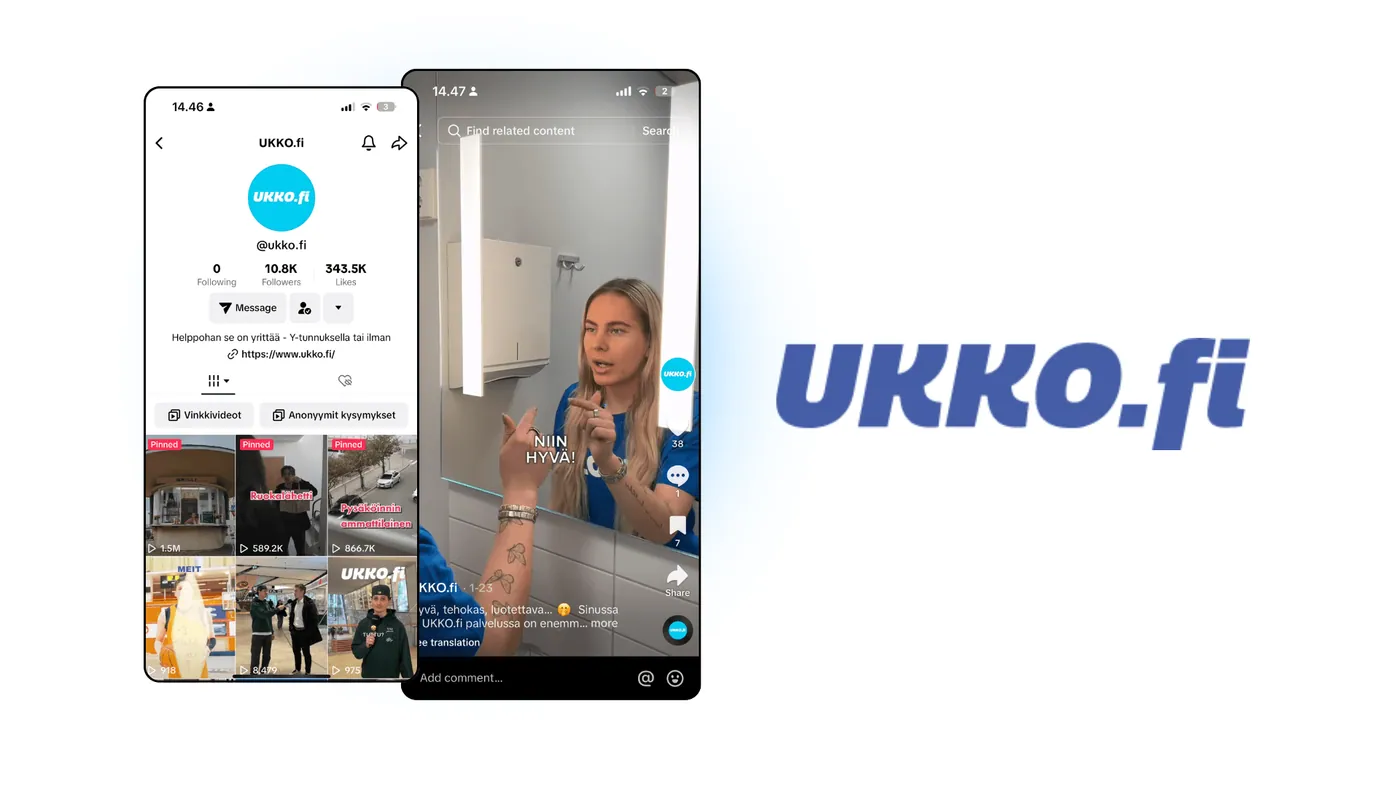

PROCESS
How the work runs
In finance the marketing is limited by regulation and the decision is driven by trust. Both show up in every choice.
Current state and measurement
We go through what may and may not be said, and what the current content promises. Compliance is settled before any channel is chosen.
The plan
A content frame around the questions a buyer actually asks: the price, the terms, and what happens if.
Production and launch
Expert content with a named author, and advertising written to pass review without overpromising.
Optimisation and reporting
Reporting on enquiries and their quality. In finance a wrong lead costs more in sales time than it did in media.
WHAT WE TRACK
What the monthly report says
Enquiries
and their quality as sales rates them
Approval rate
how much advertising passed review
Cost per customer
not per form
Content authority
named author and review date
PLATFORMS AND TOOLS
Where the work actually happens
We do not ask you to change systems. The work runs in what you already have, and we say plainly when one of them is the thing holding you back.
 Google Adssearch and demand
 Meta Adsreach and retargeting
 LinkedIn Adsby title and company
 HubSpotCRM
PipedriveCRM
 GA4measurement
Call trackingphone enquiries
GA4consent-aware measurement
WHEN WE DO NOT RECOMMEND THIS
Three situations where we say no
The claims cannot be substantiated
We will not write a return claim without a figure and a source behind it. That is a limit on the work and it is not negotiable.
Nobody will sign the content
Anonymous content underperforms in finance, and deserves to. If nobody can be named as the author, the ceiling is low.
Compliance comes last
If review happens only on a finished campaign, the work gets done twice. The rules are settled before anything is produced.
FAQ
Frequently asked
Can financial services be advertised?+
Yes, within the platforms’ rules and the regulation. What is restricted is return claims and certain targeting methods, not advertising the service itself.
Why does the author’s name matter?+
Finance is a subject where both the reader and the search engine weight who is speaking. A named expert with a qualification outperforms an anonymous page.
What does financial marketing cost?+
The work starts at around €1,500 a month. Content takes a larger share of the budget than in most fields, because trust is built with content rather than reach.
How long before it shows?+
Enquiries from search start within weeks. The effect of content and authority compounds over three to six months, and that is the part that lasts.
See also
Get channels, content and a budget, in 30 minutes
A free call where we go through your goals and propose a concrete plan.