INDUSTRY
Marketing for entertainment and media
In entertainment the selling window is short and the competition for attention constant. A premiere, a release or an event date is fixed, so the marketing has to land precisely rather than simply accumulate visibility.
First plan in two weeks · No long contracts

What decides it in this sector
Demand for an entertainment product is not evenly spread. It piles into a few weeks around the release, and what happens before the release decides how high the curve starts. Afterwards, marketing can only sustain, not build.
The second characteristic is the audience’s own voice. In entertainment viewers make content themselves, and its reach often exceeds paid advertising. So a campaign’s job is not only to tell but to give the audience something worth sharing.
- A fixed date that cannot move.
- Demand concentrates: the timing of the peak decides the result.
- The audience shares on its own, given a reason to.
- Competition is constant: the same viewer picks from ten options.
How we build it
Short-form carries the feeling
Entertainment sells on emotion, and short-form conveys it better than any other format. Trailer cuts, behind the scenes and audience reactions work better together than one polished advert.
The campaign is built around the date
We split it into three phases: recognition 4–6 weeks out, demand acceleration in a two-week window, and a sales push on release week. Each phase has its own audience and its own metric.
Audience content joins the distribution
We encourage viewers to make content and lift the best of it into the campaign. It is the cheapest way to extend reach and the most credible, because the recommendation comes from a peer.
What we measure
The final metric is a ticket sold or content played, but that only accrues at the end. So we also track leading signs that say early enough whether the campaign is on track.
- Tickets sold or downloads, by campaign phase.
- View rate and saves: interest ahead of purchase.
- Audience-made content: volume and reach.
- Growth in branded search in the weeks before release.
Who this fits
Cinemas, game publishers, festivals, event organisers and media companies. What they share is a fixed release date and an audience that decides quickly and tells others.
What it has produced
All case studies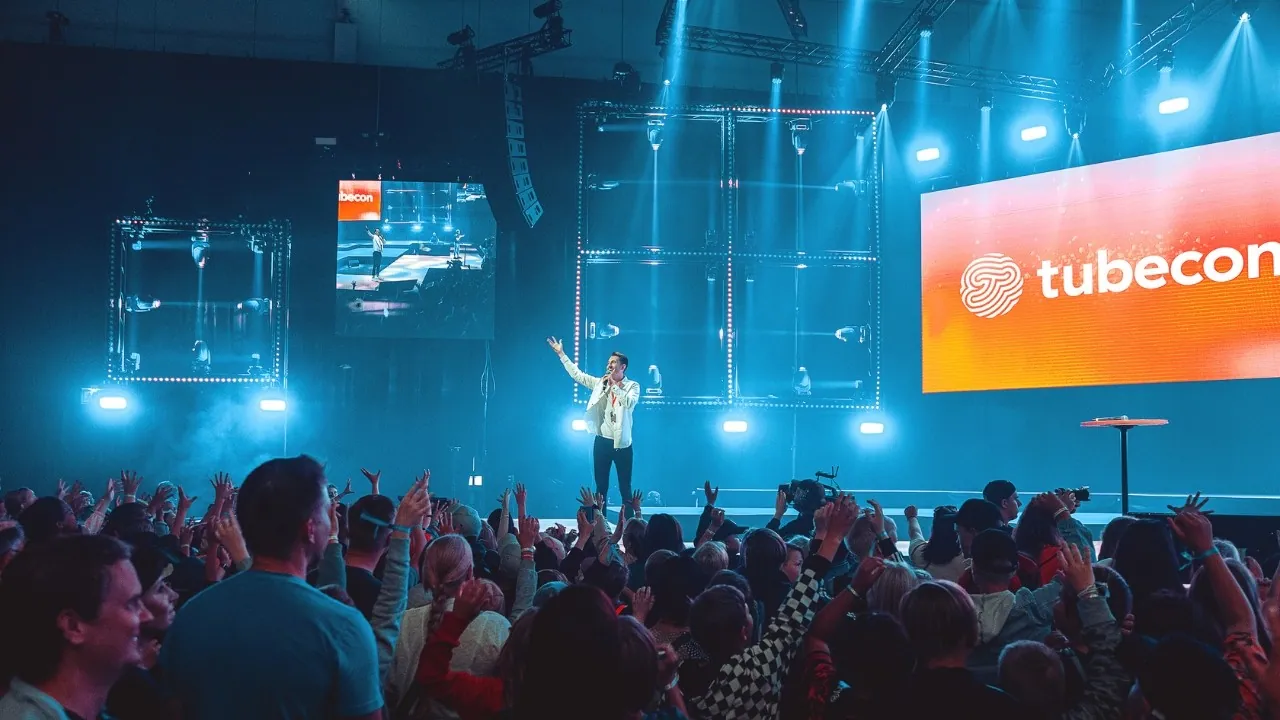

PROCESS
How the work runs
In entertainment the content is both the product and the marketing. Publishing pace decides more than the media budget.
Current state and measurement
We look at what content has already worked and why. The answer is usually in your own channel data rather than a competitor’s.
The plan
A publishing rhythm and formats that survive repetition. In entertainment a series beats a single hit.
Production and launch
Production in-house on a weekly rhythm, with media behind the posts that already work organically.
Optimisation and reporting
Reporting on how watch time distributes and which format carries, not on one post’s peak number.
WHAT WE TRACK
What the monthly report says
Watch time
how it distributes, not the sum
Saves
predicts reach
Follower growth
relative to how much was published
Ticket sales
when the goal is an event
PLATFORMS AND TOOLS
Where the work actually happens
We do not ask you to change systems. The work runs in what you already have, and we say plainly when one of them is the thing holding you back.
 Meta AdsFacebook and Instagram
 TikTok Adsshort-form
 YouTubelong and Shorts
Laterpublishing calendar
 GA4measurement
WHEN WE DO NOT RECOMMEND THIS
Three situations where we say no
The pace cannot be sustained
An entertainment channel lives on rhythm. A month off costs more reach than three good posts bring back.
The content cannot be used
If rights prevent using clips, what is left is advertising copy. That works worse in entertainment than anywhere else.
The goal is only followers
A follower count is not a result. Without ticket sales, views or subscriptions as the goal the channel cannot be steered.
FAQ
Frequently asked
How is entertainment content measured?+
By how watch time distributes and by saves, not by one post’s peak. A single viral video says less than the average of thirty posts.
How often should we publish?+
More often than in other fields: in practice several times a week. Pace is the single most important variable.
What have you done in entertainment?+
For Biorex, social media strategy and content through 2023 and 2024; for Tubecon Games and Elisa Masters Espoo, event marketing and building visibility.
Can organic content be used as advertising?+
Yes, and it makes the best ad. A post that worked organically has already been tested for free, and media budget simply widens its audience.
See also
Get channels, content and a budget, in 30 minutes
A free call where we go through your goals and propose a concrete plan.